
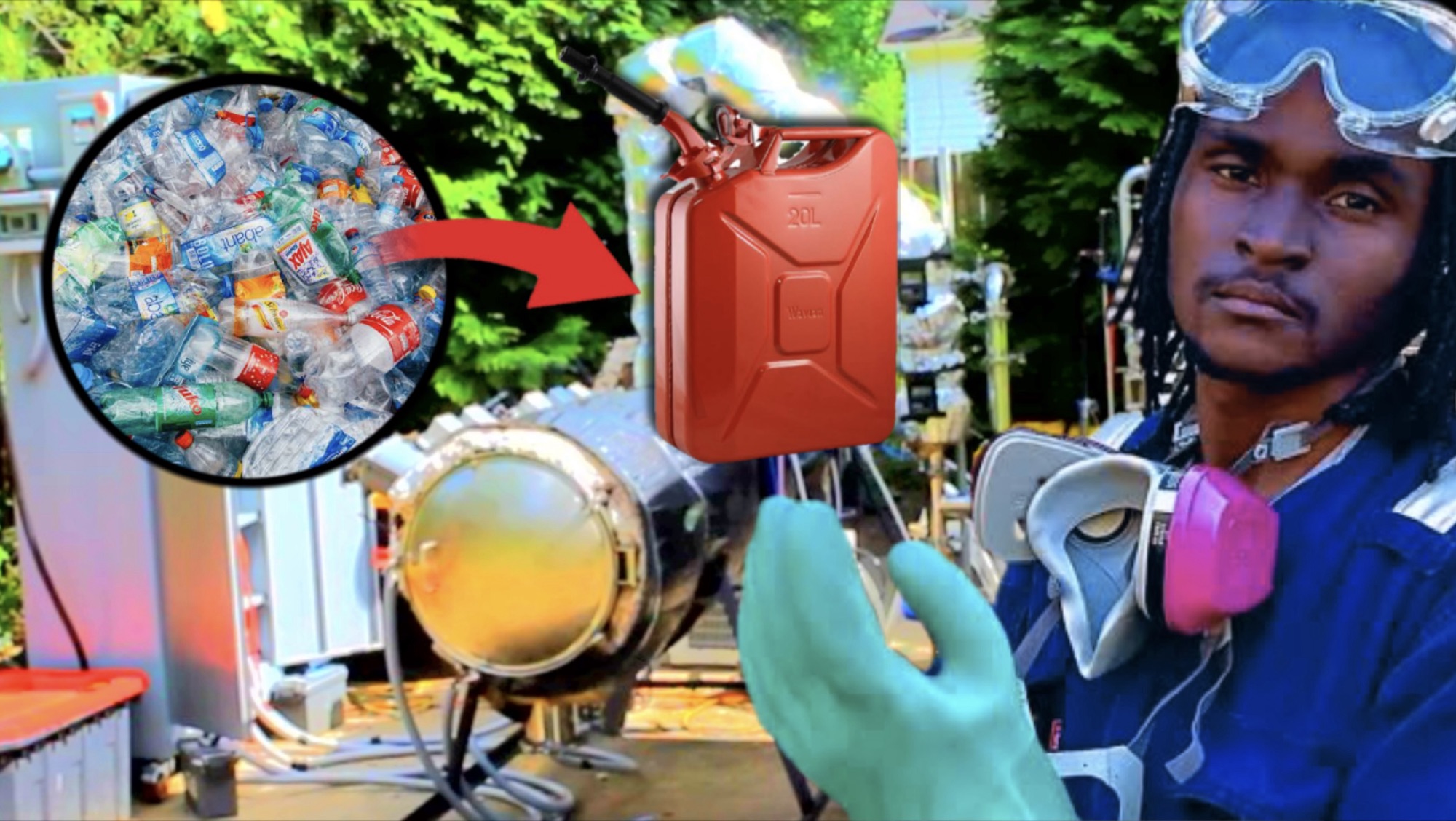
Julian Brown Turns Plastic‑to‑Fuel & Many Now Call Him A ‘Fraud’

Introduction
In the era of TikTok hype and DIY science projects, 21‑year‑old American tinkerer Julian Brown (a.k.a. NatureJab) has become a viral sensation. Brown claims his home‑built “microwave pyrolysis” machine can turn piles of plastic grocery bags into usable fuel, and he pledges to give away the plans for free so everyone can build one. The promise is seductive: free fuel from trash, carbon‑neutral energy and a shot across the bow of Big Oil. But before you invest in a garage full of microwaves, it’s worth asking: is Julian Brown a maverick inventor or just repackaging decades‑old technology?
What Julian Brown is doing
Brown’s videos show a solar‑powered rig filled with magnetron microwave generators that heat shredded plastic until it breaks down into hydrocarbons. He calls the resulting thick liquid “plastoline.” Brown is adamant that he doesn’t want to patent the process; he wants people to download free plans, build the reactors at home and solve the plastic‑waste problem. In an interview he said he believes microwave pyrolysis is “not rocket science… [it has] fewer steps, less transportation and fewer emissions” .
But is it new?
Spoiler: it’s not. Plastic pyrolysis has been studied since at least the 1970s. During the oil crisis, scientists began thermally decomposing polyethylene and polypropylene to reclaim hydrocarbons . By the early 2000s, improvements in technology and environmental pressure made commercialisation feasible . Today there are commercial plants around the world:
Canada: In 2019 the Sparta Group partnered with Phoenix Canada to convert five tonnes of plastic into about 4 000 litres of fuel using pyrolysis . The facility processes up to 18 000 tonnes of plastic a year. Another firm, RES Polyflow, handles 100 000 tonnes and produces 18 million gallons of diesel fuel and naphtha annually . Philippines: Filipino inventor Jeremy Navarro developed a pyrolysis system that melts plastic waste in a sealed thermal chamber, condenses the vapor into fuel and claims it has lower sulphur content than conventional fuel . His company processes about two metric tonnes of plastic per day, producing roughly 1 600 litres of fuel . Pyrolysis has “been around for some time,” and Navarro’s process is patented in the Philippines . India: Researchers at IIT Bhubaneswar created a solar‑powered microwave pyrolysis reactor that converts mixed waste—including plastics—into bio‑oil and biochar . They received an Indian patent and suggest the resulting bio‑oil could replace petroleum products . Malaysia & beyond: A 2013 Malaysian patent describes producing transportation fuels from plastic waste via pyrolysis; it was published in 2021 and cited in numerous later patents . A Yahoo fact‑check notes that plastic‑to‑gas projects have been underway in the Philippines since 2005, long before Brown posted on TikTok .
In other words, Julian Brown did not invent plastic pyrolysis. Even he doesn’t claim to—though many of his fans believe he did. The technology has been commercialised for decades and is being refined in laboratories worldwide .
The fraud question: hype vs reality
Brown’s promise of a free, open‑sourced machine resonates with audiences frustrated by government inaction and corporate greenwashing. But that doesn’t make his claims bullet‑proof. Critics note several red flags:
Energy balance: Pyrolysis consumes significant energy. Brown concedes that “the energy input will always be higher than the energy output” , yet his videos seldom emphasise the net‑energy deficit. Large‑scale plants offset this by using waste heat or selling by‑products (diesel, naphtha). A backyard rig running off solar panels is unlikely to produce surplus fuel. Pollution & safety: Plastic pyrolysis generates toxic gases. Brown acknowledges scrubbers and filters are necessary , but his DIY plans gloss over the cost and complexity of proper emission control. Without industrial‑grade filtration, a home reactor could spew carcinogens into your neighbourhood. Regulatory minefield: Handling flammable liquids and high‑temperature equipment invites regulatory scrutiny. Commercial pyrolysis facilities require permits and environmental controls. Operating a backyard refinery may violate local laws, and Brown doesn’t mention these hurdles. Selective storytelling: Brown’s videos focus on innovation and philanthropy but avoid mentioning that pyrolysis is widely used in other countries and commercial plants. This omission feeds the myth that he is a lone genius battling an oil‑industry conspiracy. A recent fact‑check concluded that Brown “did not invent plastic pyrolysis” and pointed to patents and projects predating his company .
The bottom line
Julian Brown’s enthusiasm is infectious and his goal of open‑sourcing technology to tackle plastic pollution is laudable. But turning plastic into fuel isn’t novel, nor is it a magic bullet. Countries like Canada, India and the Philippines already operate large‑scale pyrolysis facilities . Scientists have spent decades refining the process , and commercial players have invested millions to make it viable. If Brown truly wants to help, he could acknowledge this history, collaborate with existing researchers and focus on making safety and emissions controls accessible.
So, is Julian Brown a fraud? Probably not – he’s more likely an enthusiastic welder with a knack for viral marketing. Calling him the “inventor” of plastic‑to‑fuel technology is like calling someone who microwaves leftover pizza the inventor of cooking. The real innovation lies in making proven pyrolysis systems affordable, safe and scalable. Until then, enjoy the spectacle, but maybe leave the backyard oil refinery to the professionals.


Leave a Reply